Coming Down Gently: A Gentle Plan for the Hour After Therapy
The bit nobody warns you about
You finish a therapy session and step out into an ordinary afternoon. The sky is doing its usual thing. Someone is wheeling a suitcase past the bus stop. And you feel... odd. Raw, spaced out, unexpectedly flat, or so light you could float. None of that means the session went wrong. It means you have just spent fifty minutes in a concentrated kind of conversation, and your nervous system is still catching up.
The first hour after therapy is a transition, not a test. It deserves a bit of care — not a full wellness regime, just a soft landing.
Before you leave the room
You do not need to spring up the moment the session ends. Take thirty seconds. Put both feet on the floor. Notice the weight of your body in the chair. Drink some water if there is any. If you have another appointment straight after, ask yourself whether it can be moved; if not, give yourself permission to be a bit quieter in it.
This is also a good moment to check your phone settings. If you can, mute the group chat for an hour. The world can wait. You have just been doing something tender and internal, and it is allowed to take a minute to re-enter.
A five-minute grounding for the journey home
Grounding does not have to mean sitting cross-legged on a cushion. It can happen on a wet pavement outside the practice, on the top deck of a bus, or in the driver's seat before you pull away.
Try this: name three things you can see, two things you can hear, and one thing you can feel. Press your feet into the ground. Roll your shoulders back once. If you are driving, do this before you set off or after you have parked somewhere safe — not at the traffic lights while the light is green.
If you feel tearful, let the tears happen if you are somewhere private enough. If you feel numb, that is also a normal response. Numbness is not a failure to feel; it is a nervous system choosing the quiet carriage.
The commute is part of the session
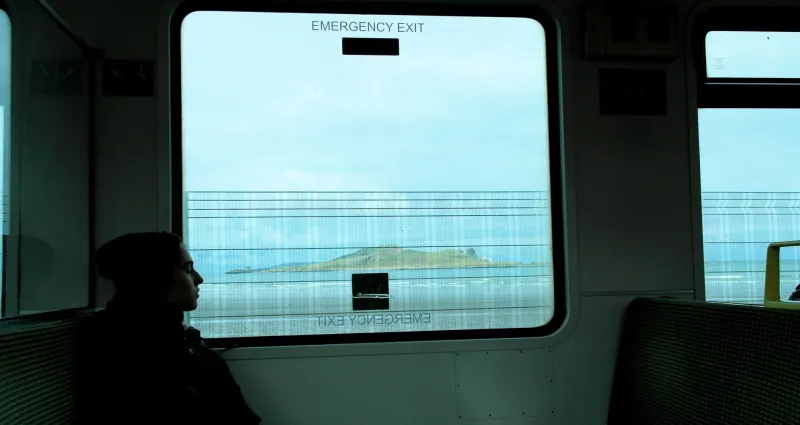
The journey home is not dead time. It is the buffer between the therapy room and the kettle. If you can, choose the slightly longer walk. Let the air hit your face. On the train, you do not have to answer emails or listen to a podcast about productivity. Put on music you already know, or nothing at all. The 18:42 can be a cocoon if you let it.
If you are going straight back to a shared house or a family kitchen, it is worth deciding in advance how much you want to say. You are allowed to keep the contents of the session private. Privacy is not secrecy; it is simply a door you get to close.
The no-explanation boundary
You do not owe anyone a report. When you walk in and someone asks how it went, you can say: 'It was fine, I'm just a bit quiet — I'll be around later.' Or: 'I'm back from an appointment and I need half an hour before I chat.' Or: 'I'm not up for a big conversation just yet, but I'm okay.'
These are not cold. They are clear. If the person pushes, you can repeat the same sentence without adding detail. 'I'm fine, just processing' is a complete answer. You are not being difficult by asking for a little space; you are being honest about what you need.
Low-effort care that actually helps
Forget the idea that you should immediately journal for forty minutes or go for a five-mile run. The hour after therapy is not the time for a project. Think smaller: a cup of tea, a piece of toast, a shower, a blanket, dim lights, the same comfortable series you have watched before. If you want to write, write one sentence. 'That was harder than I expected' counts.
Avoid making big decisions in this hour. Try not to send the emotional text, book the flight, or resign from the job. Your thinking is still settling. If something feels urgent, write it down and look at it tomorrow.
If you feel worse, not better
Sometimes the session stirs things up before they settle. You might feel more anxious, more sad, or more wobbly than when you arrived. That does not mean therapy is not working. It means the work is happening. If you feel unsafe, contact your GP, call NHS 111, or call Samaritans on 116 123. If you are a client of Valentina Hamilton Therapy and you are worried about something that came up, you can bring it to your next session — or contact your therapist using the agreed arrangements.
A soft landing is not an indulgence
You have spent an hour being honest in a way that most of us are not honest in ordinary life. The least you can do is give yourself an hour to come back. The session is the work. The landing is part of the work too.