A Messy Page Is Still a Map: Making Peace With the Notes You Keep Between Sessions
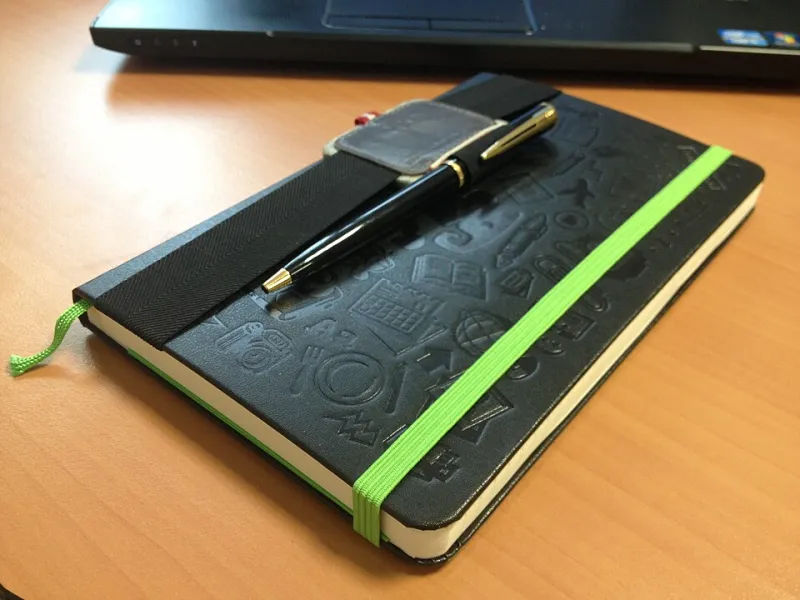
Photo: Guy Sie from Utrecht, Netherlands, CC BY-SA 2.0, via Wikimedia Commons
There is a particular kind of paper that tends to appear during therapy. Sometimes it is a proper notebook. More often it is the back of an envelope, a note on your phone, a voice memo recorded in the car, or three lines typed at 3am with your eyes half shut. It is not tidy. It is not meant to be. It is simply a place for the week to leave a trace.
Between sessions, life keeps happening. Something lands in a conversation, a memory surfaces on the bus, or you finally find the words for a feeling you have been carrying since Tuesday. Writing it down can feel like a small act of care. But it can also become another thing to keep up with, another page you are behind on. This is a gentler way to think about the notes you keep, and what to do with them when the next session comes around.
The notes are not homework
It is worth saying plainly: there is no required reading for therapy. You are not being marked on your reflections. If you have ever looked at a blank page and felt a flicker of failure, that is a sign the notebook has quietly turned into a school exercise. It does not need to be that.
Notes between sessions are optional. They can be fragmentary. A single word can be enough. So can a question you want to ask, a song lyric that caught something, or a sentence that begins, ‘I do not know why this mattered, but it did.’ The point is not to produce a record. The point is to give yourself a place to put things so you are not carrying every scrap in your head.
What tends to be worth catching
You do not need to write a transcript of your week. In fact, the most useful notes are often quite small. You might jot down:
- a moment when a feeling shifted, even slightly
- a phrase someone used that stayed with you
- a repeated thought that kept returning
- a physical sensation you noticed, like tightness in your chest or a clenched jaw
- something you wanted to say in the last session but did not
- a question you would like to ask your therapist
These are not evidence that you are doing therapy ‘well’. They are simply signposts. They help you notice patterns, and they help you bring the real texture of your week into the room rather than a polished summary.
The 3am page
Night notes are their own genre. They tend to be raw, repetitive, and dramatic in a way that daylight can make seem slightly embarrassing. That is fine. At 3am, you are not trying to be coherent. You are trying to get something out of your head so you can sleep.
If you wake with a thought that will not settle, try writing one line and closing the notebook. Not a plan, not a solution, just a note to your future self: ‘This felt huge at 3am. We can look at it on Thursday.’ You are allowed to leave it there. You do not have to solve your life in the dark.
Voice notes and unsent messages
Some people find it easier to talk than to write. A voice note on your phone can be a perfectly good way of catching a thought while it is fresh. You do not have to send it to anyone. You do not even have to listen back. It can simply exist as a container for something you were not ready to lose.
If you do record voice notes, keep an eye on where they live. Phones get handed around, screens get glanced at, and privacy matters. A locked folder or a simple passcode can be enough. And if you never send the message you drafted to your therapist, that is not a failure either. Sometimes the act of writing it is the useful part.
Bringing notes into the room
You are allowed to bring notes to therapy. You are allowed to read them aloud, glance at them, hand them over, or say, ‘I wrote some things down because I knew I would forget.’ Therapists are used to this. It is not awkward, and it is not cheating.
That said, it is worth noticing how you use them. A page can be a helpful bridge when your mind goes blank. It can also become a shield if you read every word without looking up. If you notice that happening, you can say so. ‘I have notes, but I am worried I will just hide behind them’ is a perfectly good thing to say. The notes are there to support the conversation, not to replace it.
If reading aloud feels like too much, try summarising. Choose one line and say, ‘This is the bit that keeps coming back.’ You do not owe your therapist the whole page.
What to leave on the paper
Not everything needs to be brought into the room. Some notes are for you alone. Some are too tender to share yet. Some are just repetitive worry that has already been heard. Deciding what to leave is part of the work, not a way of avoiding it.
You can write ‘not today’ at the top of a page and close the notebook. You can put the note in a drawer. You can tear it up if that feels right. The aim is not to carry every scribble into the session. The aim is to choose what would actually help you feel more understood, and to let the rest stay where it is.
A blank page is not a failed week. Some weeks are quiet. Some weeks you are too tired to write anything down. Some weeks the most honest note you can make is, ‘Nothing came up, but I felt flat on Wednesday.’ That counts. Bring that instead.
A five-minute sort before your session
If you have a pile of notes and no idea what to do with them, try this short exercise before you go in.
- Gather whatever you have written or recorded. Do not judge it. Just collect it.
- Make two loose piles, or two columns on a page: ‘carry in’ and ‘leave for now’.
- For the ‘carry in’ pile, choose no more than three things. For each one, write a single sentence about what you want from mentioning it: understanding, a question, or simply to say it out loud.
- For the ‘leave for now’ pile, write ‘not today’ and put it away. You are not abandoning it. You are giving it a place to wait.
- If you have nothing at all, write one line about how the week felt. ‘Mixed.’ ‘Long.’ ‘Quieter than usual.’ That is enough to start from.
Then close the notebook. You have done the sorting. The session can take it from there.
Notes between sessions are not a measure of how hard you are trying. They are just a way of keeping yourself company in the meantime. Bring what helps. Leave what does not. A messy page is still a map, and you are allowed to fold it up and put it in your pocket.