The Meantime Is Still Your Time: Living While You Wait for Therapy

There's a particular kind of tiredness that comes with being on a waiting list. You've done the brave bit — the form, the phone call, the conversation with your GP — and now you're in the odd position of having asked for help and being asked, very kindly, to hold on.
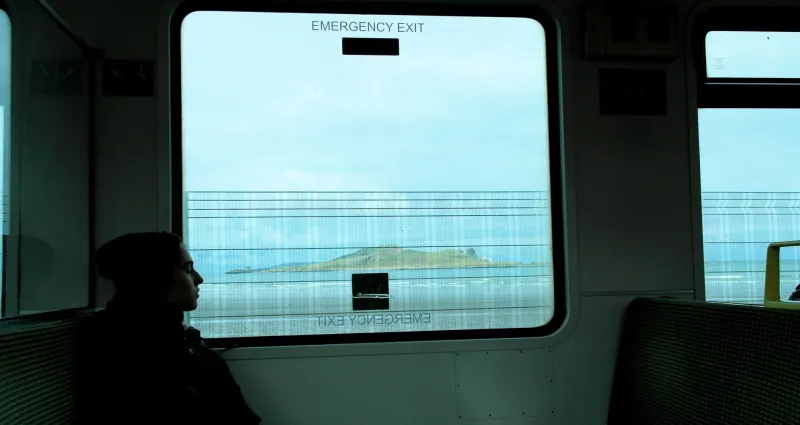
It can feel like standing in a doorway. You're not quite in the room yet, but you can't quite settle back where you were either. This piece is about that in-between place. Not a checklist to complete before session one, and not a suggestion that you should be making the most of the wait. Just a few honest notes on what the meantime is like, and a small menu of things that might make it a little steadier.
What the wait actually involves
In the UK, most people reach talking therapy through NHS Talking Therapies — either by referring themselves online or by asking their GP. You'll usually have an assessment first, sometimes by phone, and then you're matched to a service or a waiting list depending on what you need and what's available locally.
There's no single national queue. Waiting times vary from area to area, and from service to service. Some people are seen in a few weeks; others wait several months. Private therapy tends to have shorter waits, though the cost is a real consideration and not something to gloss over. Either way, the wait is rarely a neat, predictable number of days. It's a stretch of time with a shape of its own.
Why 'nearly there' can feel so heavy
You might assume that once you're on the list, the hard part is over. In practice, the wait can bring its own weight. Part of it is simple limbo: you've opened something up, and now you're holding it. Part of it is the quiet pressure to be ready — to arrive at the first session with a tidy summary of your difficulties, or to have made some progress so you don't waste anyone's time.
There's also the strange effect of being close to help. When something is finally in sight, the effort of holding things together can suddenly feel more noticeable. You may find yourself noticing symptoms more, or feeling more tearful, or more irritable, than you did before you referred yourself. That's not a sign you're getting worse. It's often just what happens when you stop white-knuckling quite so hard.
Three small anchors
This isn't a self-help plan. It's a short menu. Pick one, or none. The aim is to take up very little energy, not to add another thing to do well.
One thing to note down
Keep a single note on your phone or a scrap of paper. Not a mood diary, not a symptom tracker — just a line or two when something shifts. A moment you felt unexpectedly low, a situation you avoided, a thought that kept circling. You don't need to analyse it. You're just leaving a breadcrumb for your future self, so that when the first session arrives you don't have to reconstruct everything from memory. One line is enough. Two is plenty.
One person to tell
Waiting can become a secret, and secrets get heavier. You don't need to announce it to the world. But telling one person — a friend, a partner, a colleague you trust — that you're on a waiting list can take some of the pressure out of the room. It doesn't have to be a big conversation. Something like, 'I've asked for some help with my anxiety and I'm waiting to hear back' is often enough. If you'd rather not tell anyone you know, your GP surgery can note it, or you can speak to a helpline. The point is simply that you're not carrying it entirely alone.
One boundary to keep
Choose one small boundary that protects your energy while you wait. It might be one evening a week with nothing scheduled. It might be leaving a group chat that leaves you frayed. It might be saying no to one extra commitment you'd normally say yes to. It doesn't need to be dramatic, and it doesn't need to be permanent. It's just a small signal to yourself that your wellbeing is allowed to take up space before therapy begins.
You don't have to arrive fixed
Here's the permission slip: you are not required to turn up to session one with a polished account of yourself. You don't need to have read the books, done the breathing exercises, or worked out exactly why you are the way you are. Therapy is a place to start, not an exam to pass. Arriving as you are — ambivalent, tired, unsure, or all three — is not a failure of preparation. It's the whole point.
If the wait stretches on and you feel you can't manage, it's okay to go back to your GP or the service and ask where things are. You can also ask about low-cost counselling through charities or university training clinics. And if things feel urgent, the NHS urgent mental health line via 111 and Samaritans on 116 123 are there at any hour.
But if you're simply waiting, and finding it stranger or heavier than you expected, that's worth knowing too. The meantime is still your time. You don't have to spend it performing wellness. You just have to get through it, gently, until the door opens.