No Report Card Required: Looking Back on Therapy as 2026 Winds Down

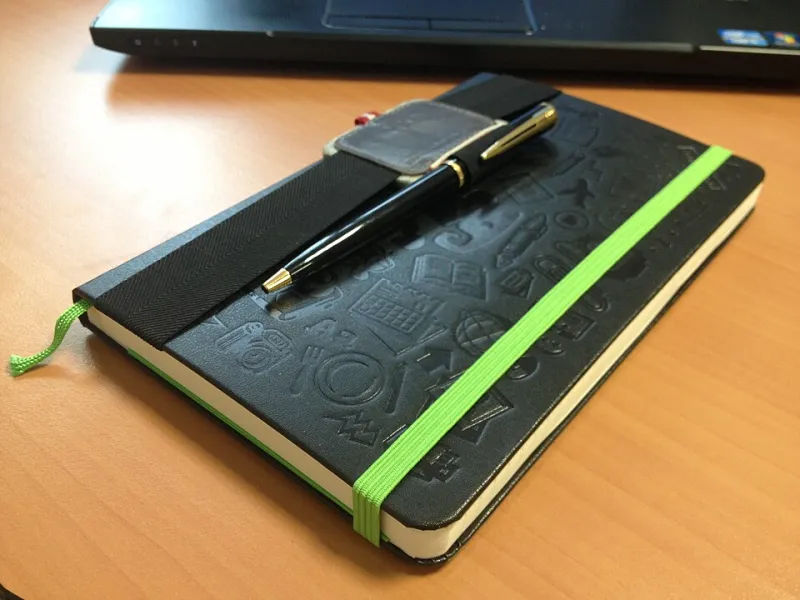
Photo: calm open notebook cup of tea winter window therapy room UK, via wallpaperset.com
There is a particular kind of arithmetic that creeps in around late November. You start counting sessions. You compare where you are now with where you assumed you would be by the end of the year. You wonder whether you have made “enough” progress, whatever that means, and whether the answer says something about you.
If you are in therapy — or waiting for it, or returning to it, or thinking about pausing — the close of the year can turn a private, gradual process into something that feels like a performance review. This is understandable. UK life is full of year-end rituals: office appraisals, school reports, gym membership reminders, the strange cultural pressure to have a plan by January. It is not surprising that some of that audit energy follows you into the therapy room.
But therapy is not a course with modules to complete. You do not need to hand yourself a grade for 2026. You can look back without marking the paper.
The audit instinct is not the enemy
Wanting to know how something is going is human. Reflection can be useful. The problem is when reflection hardens into judgement — when the only question you can ask is “Am I better?” and the only acceptable answer is a tidy, visible yes.
Inner change is often slow and unphotogenic. It might look like noticing a boundary a second earlier than before. It might look like crying with less shame, or asking for something without apologising three times, or simply being able to say, “I don’t know yet.” None of that fits neatly into a spreadsheet.
So before you start reviewing the year, it may help to soften the frame. You are not auditing a project. You are noticing a relationship — the one between you and your therapy, and the one between you and yourself.
What to notice instead of score
Instead of asking whether you have “improved”, try asking what has become more visible. Has anything become easier to name? Has a pattern started to show itself sooner? Have you begun to bring a different quality of honesty into the room, even if the content is still difficult?
Notice the small evidence. Perhaps you have got better at recognising when you are overwhelmed, rather than only realising afterwards. Perhaps you have started to question a story you used to accept as fact. Perhaps you have simply kept turning up, which is not a small thing when life is full.
Notice, too, what has not changed. That is not necessarily failure. Some things need longer than a calendar year. Some things are not waiting to be fixed; they are waiting to be understood. A year-end review can hold both: the shifts and the still-tender places.
Three questions for your final sessions of 2026
You do not need to answer all of these. You could take one question to your last session or two of the year, or write it down beforehand and see what arrives.
1. What has felt slightly more possible this year?
Not the biggest achievement. Not the most impressive change. Slightly more possible. Maybe it is saying no once without a week of guilt. Maybe it is sitting with an uncomfortable feeling for ten seconds longer. Maybe it is telling your therapist something you usually edit out. Small possibilities are still possibilities.
2. What have I stopped pretending not to know?
This is a quieter question, and sometimes a more useful one. Therapy often helps us stop negotiating with a truth we already sense. You might have stopped pretending a relationship is fine, or that you are fine, or that a particular old story has no hold on you. Knowing something is not the same as solving it, but it is not nothing.
3. What would I like more room for in 2027?
This is not a resolution. It is a direction. More room for rest? More room for honesty? More room for asking? More room for not knowing? Keep it open enough that it does not become another target to fail at.
If you are wondering whether to continue or pause
December often brings practical questions. Money, time, travel, family commitments, the strange limbo between Christmas and New Year. You may be wondering whether to carry on with therapy in 2027, reduce the frequency, take a planned break, or stop altogether.
It is worth saying this plainly: continuing is not proof that you are committed, and pausing is not proof that you have failed. People pause for all sorts of reasons — financial, logistical, emotional, or simply because they need a different rhythm for a while. The important thing is that the decision does not have to be made in shame or silence.
You can say something like: “I’m not sure whether to carry on in the new year. Can we talk about it?” That is a perfectly good sentence. You do not need a polished explanation before you bring it to the room. A planned conversation about ending or pausing is usually kinder than disappearing and hoping your therapist gets the message.
If you are continuing, you might also talk about what you want the next stretch to hold. If you are pausing, you can ask what it might look like to return. If you are ending, you can still mark the ending with care. None of these paths require you to grade the year first.
A gentler closing ritual
If you want a small ritual for the end of 2026, try this. Take a piece of paper and write down three things: one moment you were more honest than you expected to be, one moment you were kinder to yourself than you used to be, and one question you are still carrying. That is it. No score out of ten. No comparison chart. No verdict.
Put the paper away somewhere private. Let the year be a year, not an exam. Therapy is a place to be understood, not assessed for a certificate. As 2026 winds down, you are allowed to look back with curiosity rather than judgement — and to let the next session be a conversation, not a report card.